Object ID: WV0139.5.001
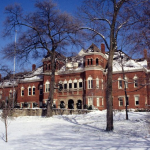
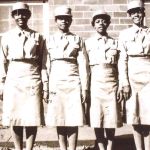
Description: Primarily documents Daisy Chamness Proctor’s experiences at the Woman’s College of the University of North Carolina (now the University of North Carolina at Greensboro) and in the American Red Cross during World War II.
Summary: Topics related to the Woman’s College in the late 1930s and Proctor’s teaching career include financing her college education; difficult academics; playing sports; memorable professors, including Ethel Martus and Mary Channing Coleman; failing American history; Dean Harriet Elliott; coaching basketball and chaperoning team trips in Loris; and winning the state basketball championship her first year coaching.
Topics related to World War II and the Red Cross include hearing about the Japanese attack on Pearl Harbor; her reasons for joining the Red Cross; meeting her husband in Bremerton and later being proposed to over the telephone; organizing dances, talent shows, and crafts in Fresno, California; her attempts to have racially integrated Red Cross events; living quarters in Fresno; the soldiers’ appreciation of the Red Cross’ work; and her opinion of women in combat positions.
Creator: Daisy Bethea Chamness Proctor
Biographical Info: Daisy Chamness Proctor of Bennettsville, South Carolina, served in the American Red Cross from 1943 until 1946.
Collection: Daisy Chamness Proctor Oral History
Rights: It is responsibility of the user to follow the copyright law of the United States (Title 17, U.S. Code). Materials are not to be reproduced in published works without written consent, and any use should credit Jackson Library, The University of North Carolina at Greensboro.
Full Text:
EE:
Transcriber, my name is Eric Elliott, and I am
here in Winston-Salem, North Carolina, today at the home of Daisy Proctor.
Ms. Proctor, thank you for being with us. This is an interview for the Women
Veterans Historical Project at the University of North Carolina at Greensboro [UNCG],
and today is January 7th in the year 2000. Another century since I started this
a while back.
Ms. Proctor, I'm going to start the questions with you today about your time in
service with the same simple question I ask everybody, and that's, where were
you born and where did you grow up?
DP:
Well, I was born in Bennettsville, South
Carolina, and grew up in Bennettsville, went to high school there and graduated
there from high school.
EE:
Did you have any brothers and sisters?
DP:
Yes. There were five of us. I had two brothers
and two sisters.
EE:
Were you in the middle?
DP:
I was in the middle, nobody's favorite. That's
a bad way to be.
EE:
Well, I come from a family of three, and my
middle sister tells me that all the time. [laughs] It's neither old nor young,
but it's in the middle.
What did your parents do when you were younger?
DP:
Well, my father was in the banking business
when I was born. He was cashier of Marlboro Trust Company in Bennettsville. When
all the banks failed, I think it was the only bank in South Carolina that didn't
fail during the Depression. It stayed open. But after that was all over with and
the banks began to open, the president of the bank died, and his son didn't want
to be president. So they liquidated the bank. So my father went to work with a
government organization, the Production Credit Association, which was an
organization that loaned money to farmers to farm their land. He worked with
that until he retired. I don't remember what year he retired.
EE:
Was that after you were out of school, after
you'd gone to college and everything?
DP:
Yes. He was chairman of the Production Credit
Association while I was in school. I went to school by working while I was in
school and also getting two grants from the college to help finance my
education.
EE:
Well, I just was wondering how it was that a
woman from South Carolina came up to North Carolina. What attracted you to
Woman's College [WC, now UNCG]?
DP:
Well, I went there because they had such a good
physical education program, and that's what I wanted to go into. It was a choice
between Winthrop College in South Carolina, in Rock Hill, and I didn't want to go
there, and the Woman's College in Greensboro. That was my top choice so that's
where I went.
EE:
Were you active in sports in high school? Did
they have a lot of sports?
DP:
Yes. I was on the basketball team. I was
captain of the basketball team and participated in that. I think that's the
only—
EE:
Was that the only sport you could letter in?
DP:
—girls' sport they had.
EE:
When you graduated from high school at
Bennettsville, was it an eleven-year or twelve-year high school?
DP:
Eleven-year.
EE:
So you ended in '36?
DP:
Yes.
EE:
What did you think of WC? Was it what you
expected?
DP:
Yes. It was awful big, but I made a lot of
friends there. I enjoyed it. It was hard. It was very tough for me to work like
I did and do well scholastically in school. I wasn't a topnotch scholastic
student. I was in high school. I was in the honor society in high school. They
called it the Beta Club. But in college I had a tough time keeping up and
working.
EE:
And as a PE [physical education] major, didn't you have to coach or
help teach other—you had to be involved in a lot of things other than just
class hours, didn't you?
DP:
Yes. Yes. I entered a lot of sports in college.
I played basketball. I played hockey. I played baseball. I swam. I got my Red
Cross life saving instructor's and all that. We were required to do all that.
EE:
Are there any instructors that you remember? Who was heading the PE department at that time?
DP:
Oh, I don't remember who they—oh, you mean in
my physical education program? I remember Miss [Ethel] Martus and Miss [Mary Channing] Coleman was the
head of the department then, and she and I didn't get along well at all. I was
not one of her favorite students. As a result, I wasn't recommended for one of
the higher jobs like some of my classmates were. But I did well to get through
college in four years and work as hard as I had to do.
EE:
You're at a time, when you look back, a lot of
things were going on in the world during those four years, and anytime you're
talking about somebody from late teens, early twenties, their mind's probably
not on politics; it's probably on boys and school, and that's about it. But I'm
just wondering what was it like, the social life at the school back then?
DP:
It was nice. We had contact, of course, with [University of North] Carolina
at Chapel Hill, and we had dances and all kinds of social functions. We managed
to have a good time.
EE:
Obviously you were on campus in the dormitories
the whole time. I know in the thirties a lot of folks were day students.
DP:
Yes.
EE:
Are there any professors outside the PE classes
that you remember or courses that either you liked or gave you the dickens?
DP:
Well, I had a terrible time with—the only
course I failed while I was in college was history. Mr. [Eugene] Pfaff was my
professor, and in spite of how hard I worked I failed the exam and he failed me
on the course. So I had to take that course over. My sophomore year, I think, I
took it over. I've forgotten which year, but I took that along with other
courses that I was required to take because I couldn't afford to go to summer
school like everybody does now.
EE:
When you were getting your degree in physical
education, did they also ask you to, I guess, get an education certificate so
that you could teach, or was that something you did on your own? How did that
work?
DP:
I don't remember. I think you got an education
certificate. I didn't have to do any extra work to get that.
I went right into teaching after college. But nobody helped me get my first job.
I got it on my own. I called the superintendent of the schools and went down
there for my interview and got the job. That was in Loris, South Carolina. The
superintendent coached the basketball team, and he wanted somebody who could
help him coach. He needed sort of a chaperone for the basketball team, which is
about what I was. We won the state championship, though, that year.
EE:
A nice way to start off, isn't it?
DP:
Yes. Yes. So that was a coup for me. He let me
do a little other recreational things besides coach basketball, but the program
was mainly basketball. That's the only thing he was interested in. I managed to
teach some ballroom dancing and that was one thing I taught, I think. That's
about all I got him to let me do. And I chaperoned all the basketball trips. I
went on all the trips when they went out of town to play. That was quite an
experience, because basketball then, especially with that team, was tough.
EE:
That was a half court game, wasn't it?
DP:
They used to get in fights, and I had boys in
my classes that had to work on the farm some of the time. So they were late
getting through school. Some of them were as old as I was. I wasn't but twenty
years old.
EE:
When you were helping out with—was it just the
boys team or boys and girls? Did they have a girls team down there, too?
DP:
Oh, yes. The girls team is the team that I
handled.
EE:
They got the state championship.
DP:
They got the championship.
EE:
You were only there for a year and then you
went to Rock Hill?
DP:
Yes. I was there for a year and went to Rock
Hill.
EE:
And what kind of work were you doing at Rock
Hill?
DP:
I taught science. That was the only
thing I taught. In Loris I taught biology and general science and coached. I
didn't do any coaching at Rock Hill. I just taught.
EE:
How long were you at Rock Hill?
DP:
Two years.
EE:
So that would have been from '41 to '43 you
were at Rock Hill?
DP:
Yes. Then I went in Red Cross.
EE:
Let me ask you one or two things about that
before we get to the main thing I want to talk to you about today, which is why
you joined the Red Cross and what you did.
When you were at Woman's College, and we talked about this a little bit before
we started the tape, Dean [Harriet] Elliott was the dean.
DP:
Yes.
EE:
What do you remember about Dean Elliott?
DP:
Well, she was a good dean, very fair, and—
EE:
Did students see her a lot on the campus?
DP:
Yes. Yes.
EE:
Were you there when Eleanor Roosevelt visited
the campus?
DP:
I don't think so. I'm trying to think who was
May Queen while I was there. It was—oh, it's a real well-known family in
Greensboro. He was a politician.
EE:
Preyer?
DP:
Preyer, yes.
EE:
Emily Harris.
DP:
Emily Preyer. She was Emily Harris.
EE:
Yes. I had a chance to meet her and interview
her.
DP:
And married Richard[son] Preyer. But she was
the May Queen. I'll never forget her. She was a year ahead of me.
EE:
She was something.
I guess it probably was when you were in Loris that the government started the
draft, even before Pearl Harbor, wasn't it? We had kids leaving high school.
DP:
Yes. Yes.
EE:
You were probably at Rock Hill, then, when
Pearl Harbor happened, weren't you?
DP:
Yes, I was.
EE:
What do you remember about that day?
DP:
Well, I remember hearing it on the radio. I was
in the car. I've forgotten where we were going, but it was on a Sunday night, and we had the car radio on. We heard it there.
EE:
Did you immediately know what that would mean
for—
DP:
Yes. All the men were drafted.
EE:
Probably made work at the school a little bit
different with the men leaving, didn't it?
DP:
Yes.
EE:
When was it that you thought about leaving
teaching and joining the Red Cross? What got you thinking that way?
DP:
Well, as I'll tell you, I didn't like teaching
at all. It just didn't suit me. The lifestyle was too restricted, and I just
didn't like it.
EE:
Did you know anybody else who had joined the
Red Cross?
DP:
Yes. I had a couple of friends who were in
the—one very close friend had joined, and she was overseas, was in the Pacific.
EE:
She's the one that gave you the warning,
“Well, if you join, don't go overseas.”
DP:
Yes. Yes. Not to come overseas.
EE:
Was there a reason, you think, that you decided
on the Red Cross as opposed to doing something like the WAVES [Women Accepted for Volunteer Service—Navy] or the WACs [Women's Army Corps]?
DP:
Well, I thought about the USO [UNited Service Organizations] and other
branches of the service, but I wanted to get in recreation, and because Red
Cross had this recreation program, and that's what I went into.
EE:
You were in Rock Hill. Where did you have to go
to sign up for the Red Cross? Did you have to go to Charlotte, or where did you
go to sign up?
DP:
I went to Washington, D.C., for my training, to
American University.
EE:
How long were you there for training?
DP:
Just a short time. It was something like a
couple of weeks at the American University. You signed up to either stay in your
area, which would have been somewhere in the Southeast, or to go anywhere in the
United States. I wanted to go anywhere in the United States, and I was delighted
to get sent to California.
EE:
Yes, considering you could have been in
Nebraska or something.
DP:
Yes.
EE:
You know, a lot of times I talk with folks who
joined and they put a preference down, and they're sent exactly the opposite of
where they signed up to go. So that's good to hear.
Did they tell you so they made it clear that you
had the choice to go in to do recreation? I guess at this time you volunteered
to join the Red Cross, but you are paid something, aren't you?
DP:
Oh, yes.
EE:
Is the pay comparable to what you were making
as a teacher?
DP:
More, more than I was making as a teacher.
EE:
That doesn't hurt either, then, does it?
DP:
No.
EE:
Were your brothers in the war?
DP:
Yes. Both my brothers were in the Second World
War. They both were in the navy. My youngest brother was in the Korean War as a
lieutenant. He went to Officers Candidate School.
EE:
So you were the world traveler, then. Was that
trip out to California, was that the farthest away from home you'd ever been?
DP:
Yes. Yes.
EE:
So it's a totally new world for you. Was it the
first big train trip you'd taken. I guess you probably took the train. Did you
take the train or take the bus to Greensboro?
DP:
Train, train to the West Coast.
EE:
And you were telling me on the phone you ended
up having three stations, I guess, three stops when you were in the Red Cross.
Where did you go first?
DP:
I was in Fresno, California, at Hammer Field,
where they had the famous Black Widow [P-61] fighter planes. At first, when I first got
there, they had the B-24 bomber. Then they switched over to these Black Widow
fighter planes. I was there for—I've forgotten how long, several years in
Fresno at Hammer Field. Then I was transferred to Utah. And that was the air
force, but it was ground forces, in Kearns, Utah, which was near Salt Lake City.
That was a miserable spot.
EE:
You were there in early '45? Is that when it
was?
DP:
I think so.
EE:
Had the war ended by the time you got to Utah?
DP:
I'm not sure when I was there. I wasn't there
for very long. Then I was sent to Oakland, California, to the naval station at
San Leandro, California. From there I was transferred to Bremerton, Washington.
These were both naval hospitals.
EE:
So you had, in short order, three stops in '45,
sounds like, before you got out. When did you actually—was it '45?
DP:
I got out in '46. I went in, I think, in '43.
So I was in for three years. And I met my husband in Bremerton, Washington.
[laughs] That was a funny experience.
EE:
Was he in the service?
DP:
He was a lieutenant j[unior] g[rade] doing his internship
in the navy and stationed at the hospital there at Bremerton. The first night I
was there I broke my little toe, and they took me to the emergency room, and he
was on X-ray, and he X-rayed my toe. That was how we met.
EE:
Well, the first time you meet, okay. I can
understand that. How do you back for the second meeting after that? Did you just
run into each other? Or did he propose right there at the hospital?
DP:
Well, no, he came over a week later and asked
me to go to a dance, and I went with my broken toe.
EE:
I guess they could give you the medical
assurance it was all right.
DP:
And we started dating from then on.
EE:
So you were at Bremerton, what, probably six
months or so?
DP:
I've forgotten how long I was there.
EE:
By the time you left, had you decided that you
were going to marry this fellow?
DP:
Well, no. He was transferred from Bremerton to
[Naval Station] Great Lakes in [North] Chicago, and I stayed on in Bremerton. He asked me to marry him
before I left Bremerton. He called me on the phone from Chicago, and he proposed
on the telephone. [laughter]
EE:
I guess you had to know him pretty well to say
yes at that point. What was his name?
DP:
Richard C. Proctor. He went into psychiatry. He
did a year of residency in the navy and then came back here. He was a graduate
of Bowman Gray [School of Medicine in Winston-Salem, North Carolina] and he came
back here and did two more years [of residency] at Graylyn with Bowman Gray when Graylyn was a
psychiatric hospital, private psychiatric hospital, part of Bowman Gray Medical
School. Then, when they closed Graylyn, he became chief of the Department of
Psychiatry at Bowman Gray Medical School, and he was there for thirty years
before he retired. He had Alzheimer's and had to retire.
EE:
So did you all move out here together in '90?
DP:
Yes. We came out here because he was sick, and
we wanted a place for him to go when I couldn't look after him any longer. I
looked after him here in this apartment for as long as I could until he got to
the point where he needed more help than I could have here in the apartment. He
died in health care.
EE:
How long ago was that?
DP:
1995.
EE:
It is a long—what is the book,
A 36 Hour Day [by Nancy Mace and Peter Rabins] or something, about that? My grandfather passed away of the
same illness. It's a long process, isn't it?
DP:
It's a terrible illness. He had it for eleven
years before he died. So by the time he died he didn't know any of his family,
didn't know me or the children or anybody.
EE:
How many kids did you all have?
DP:
Two, a boy and a girl.
EE:
Well, I had two boys. I couldn't get them made
to order. My sister has four girls, trying to get the other boy.
Let me go back and fill in a few things about your time in service. What
actually were you doing? What was your day-to-day job in Fresno when you first
got out there?
DP:
Well, we made the rounds of all the wards in
the hospital that we could visit. We took crafts out there for the men to do. We
organized activities in our Red Cross building, such as talent shows. We had
dances. I remember I had such a hard time with the CO [commanding officer] of the place over the
dances. We had, of course, we had black boys who didn't have any hostesses, any
girls to dance with, and I wanted the people who were bringing the girls out
there to bring black girls as well as white girls and to have mixed dances. That
didn't suit at all.
EE:
Was there an official policy on it or pretty
much just whatever the CO wanted to do?
DP:
It was whatever the CO wanted to do. So I went
to him and complained and talked him into letting me bring some black girls out
there for the dances.
EE:
Because of wartime, I guess people were more
integrated than they'd ever been before up to that time.
DP:
That's correct. That's correct.
EE:
Well, from the South, did you not have—you
don't sound like you had any reservations about that.
DP:
I didn't. I didn't. When we didn't have black
hostesses, I danced with the black boys, and, of course, I did recreational
things with them all the time.
EE:
How many people were stationed out there?
DP:
I don't know. I've forgotten. It was a big
base, though. It was a big hospital.
EE:
How many Red Cross people? Were you like the
head of a group of Red Cross or assigned a certain group?
DP:
I was head of the recreation department there
and everywhere that I was stationed. I wasn't head a soon as I got out there,
but later I was made the head before I left.
EE:
Were the Red Cross women housed there out on
the barracks? Were they housed there at the base?
DP:
We were housed in the Red Cross building, which
was a big building. It had a big auditorium. It had bedrooms upstairs where we
lived. It had a library. We had movies for the boys. We had movies every week.
EE:
Were there any other enlisted women? Were there
any WACs who were on that base?
DP:
No.
EE:
So you all were the only women who were on the
base?
DP:
Yes. There were the nurses.
EE:
Now, I know you've been away from home for a
while before you go out there, but I'm curious. What did your parents think
about you joining up with the Red Cross and going so far from home? How did they
feel about it?
DP:
It was fine with them.
EE:
So they weren't worried about the kind of stuff
you were doing?
DP:
No.
EE:
Your immediate boss, when you had to plan
something you had to always get the CO's approval, I guess, for something
special. Or did you have a supervisor? You said when you first went through you
had a supervisor.
DP:
No. We had a supervisor there who was head of
the whole program. We didn't have to get approval of everything from the CO. The
dances, that was the only thing I ever remember going to him about.
EE:
Most of the people that you were working with
as far as the work goes were other women. You didn't have to work on a
day-to-day basis, then, with a male supervisor?
DP:
No.
EE:
How did the soldiers treat you all? Did you
have any trouble or static from people, or were most of them appreciative and
courteous?
DP:
Most of them were appreciative. We furnished
them cigarettes and did their recreation. We had a pool table in the auditorium
where they spent all their time. They taught me how to shoot pool.
EE:
I figured you probably picked up a few skills
out there. What was your work week, a five-day week or six-day week? How long
was your work week when you were out there? Do you remember?
DP:
I don't remember.
EE:
But you got to travel on the weekends?
DP:
I don't remember how we worked the weekend.
EE:
You probably didn't have a car. Did somebody on
base have a car?
DP:
Red Cross had a car. Yes.
EE:
When you signed up, was it for the duration of
the war or just for that three years, just a three-year commitment?
DP:
I didn't sign up for any length of time.
EE:
Then it must have been for the duration of the
war. Well, did you ever think about staying in the Red Cross and making it a
career, or was that just not an option?
DP:
No. When I planned to get married, I got out. I
resigned right away.
EE:
So you all got married in '46?
DP:
'48.
EE:
After he came back to school.
DP:
Yes. He was still in the navy when we got
married, but he was only in for another year, or I've forgotten exactly how
long. We came back here in '48, so he got out in '48.
EE:
What was the hardest thing that you had to do
while you were in the Red Cross, either physically or emotionally, do you think?
DP:
I don't remember any of it being hard,
difficult.
EE:
How about anything that was particularly
embarrassing or funny that happened, either to you or somebody that you knew? Do
you have any recollections of—
DP:
No.
EE:
There's so many people, I guess, you meet when
you're out there, it's kind of hard to keep track of them after a while, isn't
it? Did you ever keep up with any of the girls that you worked with you were out
there?
DP:
Did what?
EE:
Did you ever keep up with any of the girls that
you worked with?
DP:
Yes. We kept up for a while.
EE:
Either when you were at Fresno or back when you
were at Utah or Oakland or Bremerton, did you ever feel afraid or in physical
danger of being in these new places?
DP:
No.
EE:
In other words, the service folks were going to
take care of you?
DP:
Yes.
EE:
Do you remember where you were when you heard
about Roosevelt passing away?
DP:
No.
EE:
How about VE [Victory in Europe] or VJ [Victory in Japan] Day? Do you happen to
remember?
DP:
No, I don't remember that.
EE:
For social life when you were out there—I know
when you were at Bremerton, social life became your husband, but before then,
did the Red Cross girls go out together or pretty much everybody was on their
own for social life? What did you all do for fun?
DP:
Well, we met all the doctors and people that
worked in the hospital, and we could go to the Officers' Club anytime we wanted
to.
EE:
That was nice.
DP:
And we had plenty of social life.
EE:
Can you think of any particular songs or movies
when you see them rerun on TV that take you back to that time, and when you hear
them or see them, you say, “Oh, yes. I remember that's—”?
DP:
No.
EE:
There's a lot of things that go on for that.
Well, do you think that your time in the Red Cross, that by serving there you
helped contribute to the war effort?
DP:
Yes, I think I did.
EE:
By being stateside, you can kind of help me
answer this one: You know, most of the people I've talked with who talk about
that time talk about it being a lot more patriotic than we are now, that
everybody was pulling together. But when you were out there in Fresno, did you
ever get the sense from the people at the base or the people just in the general
public that people might have been afraid at some level that we might lose the
war? Was there any fear of that?
DP:
No.
EE:
When you think back to the wartime, are there
any people that you think of as heroes or heroines who stand out in your mind?
DP:
No.
EE:
After you told your husband “I do”
over the phone, you all came back to this area. Did you get back in the work
force, or did you raise the kids? What did you do after you came back from your
time in the service?
DP:
Well, when we first got married, my husband was
still in the navy. So we were stationed at Great Lakes in Chicago, and we lived
in an apartment in a little place near the place called Zion,
Illinois, which was a little small town. We lived there for a while, and we
lived on the base for a while when they opened up some apartments around the
hospital. We lived in one of those apartments.
While I was there I had to cook and keep the house and do that sort of thing,
but I got in the Volunteer Red Cross that worked in the hospital, as a volunteer
doing the bookmobile and things like that that the Red Cross volunteers do.
Then, when he got out of the navy and we came back here and were at Graylyn, I
had a job as a recreation director there, and I taught swimming and did the
recreation with the patients there.
EE:
It's nice to be able to work at the same place
as your husband, isn't it?
DP:
Yes. Yes. All the wives over there worked. We
were all supporting our husbands because, as residents, they weren't making any
money, very little. They were getting what little they got from the B-12
program, but our room and board was free over there, of course. We lived at
Graylyn. They had converted all the estate buildings—are you familiar with that
estate?
EE:
Yes. Did you live inside the main building or
back in the back of the—
DP:
We lived back in the stable—
[Begin Tape 1, Side 2]
DP:
We bought a lot and built a house over on
Westview Drive and lived there until we moved here.
EE:
So you've seen a lot of changes in
Winston-Salem, haven't you?
DP:
Yes.
EE:
We came here about the same time you moved
here, my family moved to Winston-Salem. So it's changed a fair amount since
we've been here.
Well, in looking back at things, when you think about your time in the Red
Cross, it's easy for me to say, well, how your life changed because of your time
in the Red Cross: you found Mr. Right in the Red Cross. But do you think that
anything changed about you because of your time in the Red Cross back in the
war?
DP:
Well, I had to give up a lot of the Southern
upbringing, like my racial prejudices.
EE:
Do you think it made you more independent than
you would have been otherwise?
DP:
Oh, yes, much more independent.
EE:
You had to make a lot of decisions more than
you might have other places, didn't you?
DP:
Yes.
EE:
And you were making decisions at the age of
twenty-two and twenty-three as to how all these men would be handled?
DP:
Yes.
EE:
That's pretty important.
You're not in the service in the Red Cross during that time, but you're
certainly watching what changes are happening in the service. Part of them we
already mentioned, with the integration of blacks and whites. But women started
entering the service a lot during that war, and today the role in the military
for women is so different from back then. We sent our first woman into combat as
a fighter pilot back in December a year ago when we bombed Saddam Hussein. I'm
just wondering, do you think that there are some jobs in the military that
should be off-limits to women, or do you think that they should be open to
all—levels for women?
DP:
I don't think women ought to fight, be in
combat at all.
EE:
Okay. Well, I have gone through all my thirty
questions. Can you think of anything else that I have not asked you about your
time service with the Red Cross?
DP:
No. I think we've covered everything.
EE:
Well, I appreciate your sitting down and doing
this with me today, and I know, from the school's perspective, it's nice to find
somebody who's a WC grad so we can talk about two things at once, WC and your
time in the Red Cross.
So transcriber, thank you for being patient with us. We'll see you. Hope
California's as pretty as this today. It's nice outside.
[End of interview]